Hundreds of thousands of Virginians have secured their votes by participating in early in-person voting and mail-in voting and many others will be at the precincts on Nov. 3. The Lake of the Woods Democratic Club has been working diligently for months to inform voters about their choices and to support their access to the polls.
Club members expect sweeping Democratic victories, but — win or not — they will celebrate their efforts with a social event Nov. 12 at the Clearwater Grill restaurant, 4276 Germanna Highway. The party will be from 6 to 8 p.m. and will include appetizers and a cash bar. Guests will be welcome to move to the dining room to order dinner after the event if they wish.
The event will take the place of the club’s regular monthly meeting at 1 p.m. in the LOW Community Center.
Throughout the election season, club members have volunteered their time and effort to distribute information about Democratic candidates and issues, to deliver yard signs to those who request them, to knock on doors and to make telephone calls in neighborhoods outside Lake of the Woods, to answer questions and encourage voters, and to organize opportunities for voters to meet our candidates and discuss the issues that are important to them.
These efforts have resulted in a local political climate that is clearly changing for the better and empowering citizens to insist on government that is responsive to their interests.
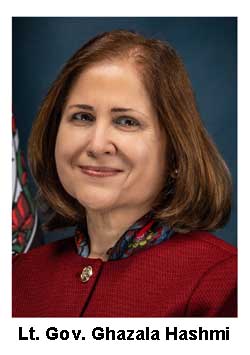
Lt. Gov. Ghazala Hashmi will be the guest speaker at the annual Holiday Luncheon of the LOW Democratic Club on Dec. 10.
The much-aticipated event will take place from noon to 2 p.m. at Kearney Pub at Old House Vineyards, 18351 Corkys Lane in Culpeper.
Lt. Gov. Hashmi was the first Muslim and the first South Asian American to serve in the Virginia Senate. As an experienced educator and advocate of inclusive values and social justice, her legislative priorities include public education, voting rights and the preservation of democracy, reproductive freedom, gun violence prevention, the environment, housing, and affordable healthcare access.
As a four year old, Ghazala emigrated with her mother and older brother from India to the United States where they joined her father in Georgia just as he was completing his PhD in international relations and beginning his university teaching career. Ghazala grew up in that small college town, at a time when public schools were being desegregated, and so she saw firsthand how communities can be built and dialogue promoted through intentional efforts to bridge cultural, racial, and socioeconomic divides. After graduating as valedictorian of her high school class and receiving multiple full scholarships and fellowships, Ghazala earned a BA with honors from Georgia Southern University and her PhD in American literature from Emory University in Atlanta.
Ghazala and her husband, Azhar, moved as newlyweds to the Richmond area in 1991, and she spent nearly 30 years as a professor, first teaching at the University of Richmond and then at Reynolds Community College. While at Reynolds, she also served as the Founding Director of the Center for Excellence in Teaching and Learning (CETL). She and Azhar have two adult daughters who both graduated from Chesterfield County Public Schools and the University of Virginia.
The cost of the luncheon is $30 per person, which includes a plated entree with a side salad and dessert buffet as well as water and a self-service coffee bar. A cash bar will also be available.
Please select your choice of four available entrees at the time of registration.
Smoked Duck Salad — Field greens tossed with dried seasonal fruits, pickled red onions, crumled goat cheese, and toasted almonds
Roast Beef Crostini — Herb roasted and sliced over crostini with a caramelized onion and Old House Bacchanalia demi-grace served with a side house salad
Quiche — Homemade carmelized onion and gruyere quiche with a side house salad
Grilled Salmon — Grilled salmon, creamy polenta, superfood claw and roasted red pepper sauce
All luncheons include a Dessert Buffet of assorted mini desserts: sea salt caramel brownies, lemon bars, pecan bars and chocolate chunk cookies.
Payment may be made online by clicking the “Pay Now” button below or by sending a check to P.O. Box 1351, Locust Grove, VA 22508. No payments will be accepted at the door per Old House catering policy.
Register early because we are limited by the venue to 75 guests.
If you pay online, be aware that the club will incur a transaction fee. Please consider offsetting this fee by paying by check or by including the fee with your payment.
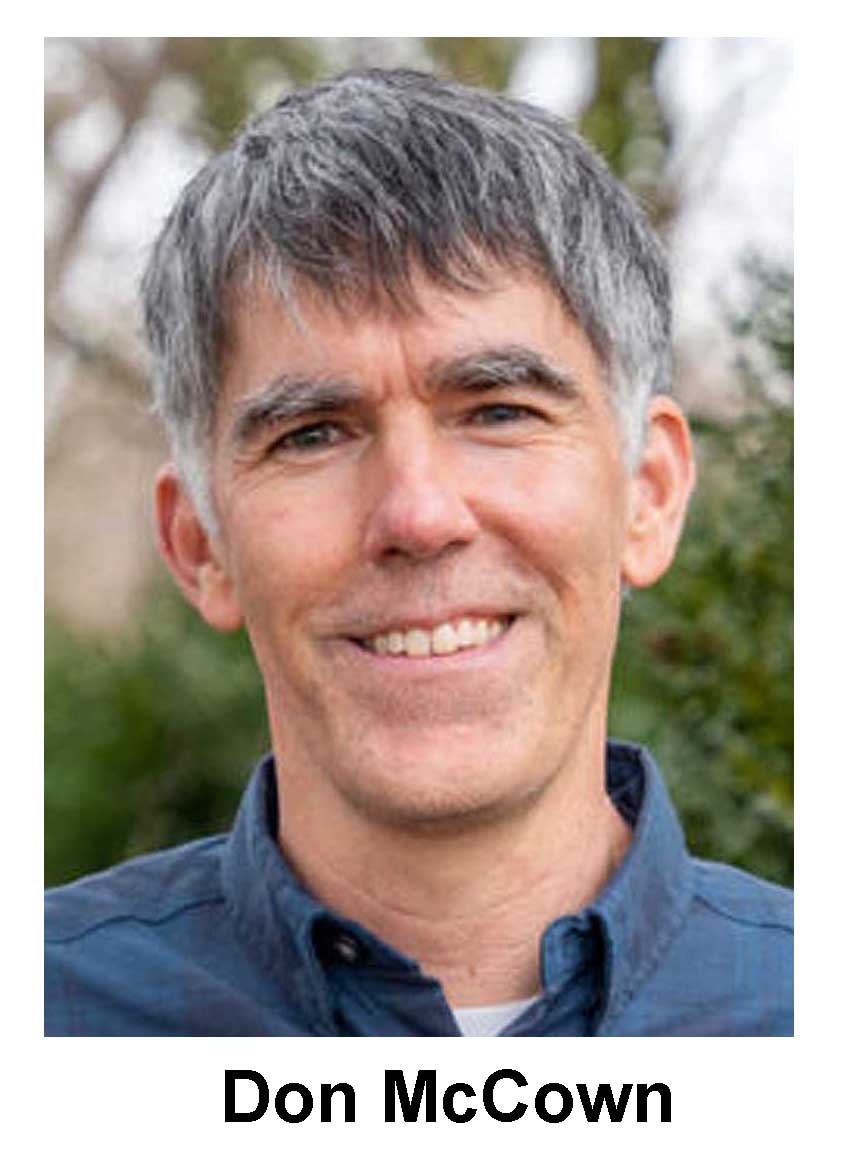
Don McCown, land use field representative for the Piedmont Environmental Council, will speak to the Lake of the Woods Democratic Club on October 8 about the impact of recent industrial proposals on life in Orange County.
The program will begin at 1:30 p.m. in Classroom 1 of the LOW Community Center. A meet-and-greet session will proceed the presentation at 1 p.m.
McCown joined the Environmental Council in 2022 and is responsible for addressing land use and transportation issues in Orange and Madison counties.
Prior to his present position, he served for more than 20 years in a variety of community service roles, including as a supervisor in Virginia’s magistrate system and as AmeriCorps program director for Habitat for Humanity of North Carolina.
Originally from West Texas, McCown and his family have lived in the Piedmont for more than 15 years. McCown received his B.A. in sociology from the University of Oklahoma and his J.D. from The Catholic University of America.
The Piedmont Environmental Council is a locally based, donor-supported 501(c)(3) nonprofit and an accredited land trust. Its mission, according to its web site, is to “protect and restore the lands and waters of the Virginia Piedmont, while building stronger, more sustainable communities.”
The Council recently urged Virginia’s political leaders to declare a moratorium on data center development in the Commonwealth, saying more time is needed to implement protections for residents and natural resources. The organization is helping to organize a march on Richmond on October 24 to encourage legislators to support the moratorium.
The Council is also actively fighting an unprecedented expansion of high-voltage power lines driven by the boom of data center construction in Northern Virginia. Most notable is a massive 115-mile proposed transmission line — jointly backed by Dominion Energy, Transsource and FirstEnergy Transmission — running from Joshua Falls in Campbell County to a new Yeat substation in Culpeper County. The line would cut a wide swath through the heart of Orange County.
Both these issues have been of considerable concern for property owners in Lake of the Woods.
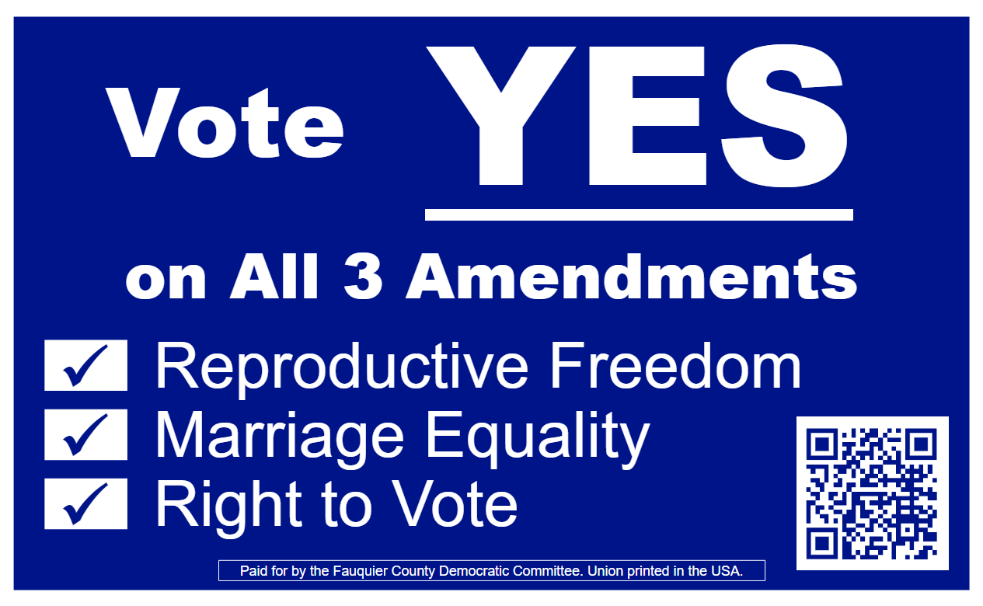
Virginia’s 2026 General Election ballot will include three Constitutional Amendments that will enshrine important civil rights into the state Constitution — marriage equality, reproductive freedom, and protections for the right to vote.
The LOW Democratic Club will devote its September 10 meeting to a discussion of the three proposed amendments. The meeting will take place at 1:30 p.m. in Classroom 1 of the LOW Community Center. All are welcome to attend.
Yard signs urging “yes” votes on the three measures will be available for distribution at the meeting.
The actual wording of the ballot measures will be presented as well as explanations of why the amendments are necessary.
Brief synopses of the background of the three amendments follows:
Marriage Equality: In 1967, in Loving v. Virginia, the U.S. Supreme Court overturned laws banning interracial marriage and struck down Virginia’s Racial Integrity Act of 1924.
In 1996 the U.S. Congress passed the Defense of Marriage Act (DOMA), defining marriage as a union of one man and one woman, banning federal recognition of same sex marriages, and allowing states to refuse recognition of same sex marriages granted in other states.
In 2006 Virginia voters passed a Constitutional Amendment that defined marriage as “only a union between one man and one woman”.
In 2015 the U.S. Supreme Court ruled that bans on same sex marriage are unconstitutional. This decision nullified the language in the Constitution of Virginia.
If the Supreme Court were to overturn its 2015 decision, the language in the Constitution of Virginia would then be in effect again. Therefore, the proposed amendment of 2026 would remove the 2006 same sex marriage ban language and officially recognize that any two adults “may marry regardless of sex, gender, or race.”
Reproductive Freedom: The proposed amendment of 2026 would add a new section to the Constitution of Virginia guaranteeing an individual’s reproductive freedom as a fundamental right. The new language upholds a person’s ability to make and carry out decisions related to their own prenatal care, childbirth, postpartum care, contraception, abortion care, miscarriage management, and fertility care. It protects healthcare workers and other individuals who assist in such care. It allows for restrictions on abortion in the third trimester, but not when a physician determines it is needed to protect the life or physical or mental health of the patient or that the fetus is not viable.
Protecting the Right to Vote: The Constitution of Virginia enacted in 1902 imposed a lifetime ban on voting for anyone convicted of a felony. Restoration of the right to vote could only be obtained from the governor.
In recent years, Governors Bob McDonnell, Terry McAuliffe, and Ralph Northam all created forms of automatic restoration to applicants, but Governor Glenn Youngkin ended automatic restoration and returned to a process of evaluating individual applicants.
The proposed amendment of 2026 adds language making it clear that voting is a fundamental right for all who meet the basic citizenship, age, and residency requirements; automatically restores the right to vote to convicted felons upon completion of their incarceration; and updates language currently used to disenfranchise anyone adjudicated to be mentally incompetent with language referring instead to a lack of capacity to understand the act of voting (people requiring assistance in managing their financial affairs can frequently still understand voting).
Early in-person voting begins September 18 at the office of the Orange County registrar, 130 N. Madison Road, Orange, VA. Election Day is Tuesday, November 3.